The Union Pacific Railroad (UP) is one of the most significant railroads in the United States and holds a foundational place in American history. Established in 1862, the Union Pacific was central to the development of the transcontinental railroad, linking the Eastern United States to the West Coast and transforming the American economy, culture, and society. Today, the Union Pacific continues to be a major freight transportation provider, with a legacy that spans over 160 years. This concise History of the Union Pacific Railroad traces the history of the Union Pacific, drawing insights from notable sources, including Maury Klein’s Union Pacific: The Reconfiguration, Stephen Ambrose’s Nothing Like It in the World, and John Hoyt Williams’ A Great and Shining Road.
The Beginnings: The Pacific Railway Act of 1862
The Union Pacific Railroad was born out of a vision to connect America’s coasts, which was formalized with the Pacific Railway Act of 1862. Signed into law by President Abraham Lincoln during the Civil War, this act authorized the Union Pacific to build westward from Omaha, Nebraska, while the Central Pacific Railroad would build eastward from Sacramento, California. This project would establish the first transcontinental railroad, a landmark achievement that would reshape the country. In Nothing Like It in the World, Ambrose notes, “It was a monumental task… a feat of engineering, resolve, and a testament to American ambition and drive” (Ambrose, 2000).
The Union Pacific was given generous government support, including land grants and loans, to undertake this ambitious endeavor. Construction began in 1863, but progress was slow initially due to wartime challenges, lack of funding, and labor shortages. However, with the war’s end, the railroad began to gain momentum, attracting laborers, investors, and adventurers seeking to make their mark on America’s frontiers.
Building the Transcontinental Railroad
The construction of the transcontinental railroad involved enormous challenges. Union Pacific’s construction crews, consisting of Irish immigrants, Civil War veterans, and other laborers, endured harsh conditions, including extreme weather, attacks by Native American tribes, and grueling physical demands. The railroad’s construction led to significant tensions with Native Americans, who saw the railroad as a direct threat to their lands and way of life. This conflict is a recurring theme in Williams’ A Great and Shining Road, where he describes the impact on Native American communities, stating, “The railroad represented both the promise and the peril of America’s westward expansion” (Williams, 1988).
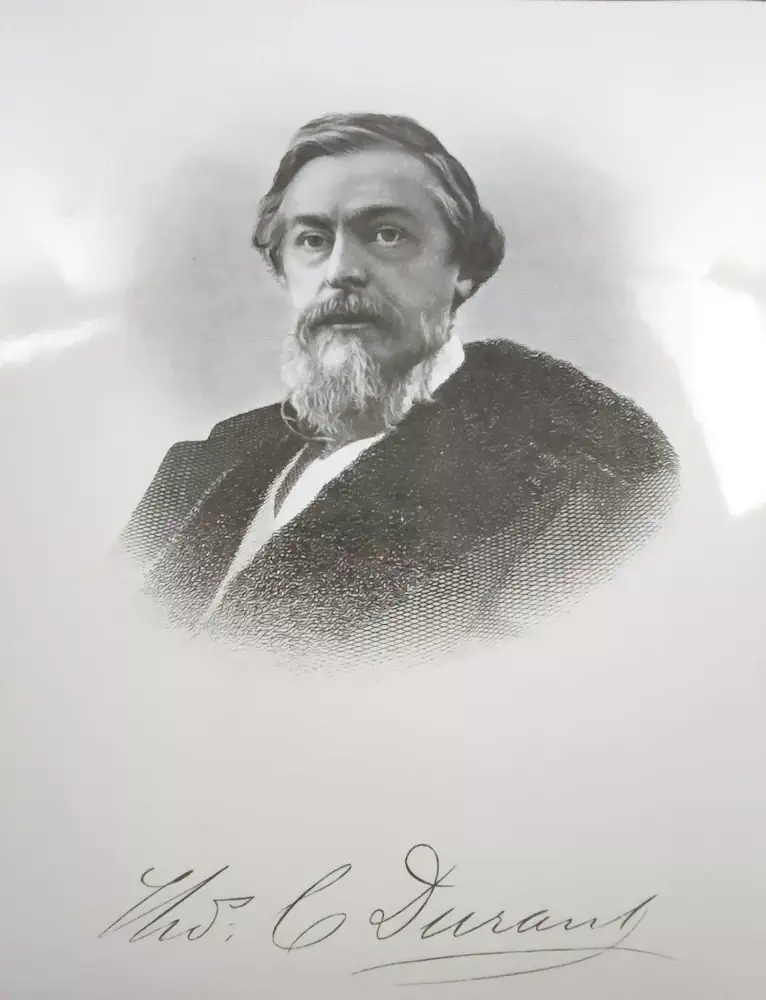
One of the defining figures in Union Pacific’s early history was Thomas C. Durant, a financier known for his ruthless tactics. Durant’s leadership helped push the railroad forward, but his questionable financial practices led to widespread corruption, particularly in the Credit Mobilier scandal of 1872. Through Credit Mobilier, Durant and others siphoned profits by overcharging the government, an event that damaged Union Pacific’s reputation but highlighted the intense competition and greed surrounding the project (Klein, 2006).
Despite these challenges, Union Pacific and Central Pacific crews met on May 10, 1869, at Promontory Summit, Utah, marking the completion of the transcontinental railroad. This momentous occasion was symbolized by the driving of the golden spike, a ceremonial event that represented the unification of the country’s east and west. The completion of the railroad was a triumph of engineering and endurance, forever changing America’s economic and social landscape.
Expansion and Growth
With the transcontinental railroad complete, Union Pacific focused on expanding its reach across the western United States. The railroad played a vital role in transporting goods, people, and resources, accelerating the settlement and economic development of the West. Union Pacific acquired smaller railroads and extended its routes, becoming a central transportation link that fueled the nation’s industrial growth.
During the late 19th century, Union Pacific continued to grow, even as it faced fierce competition from other railroads and financial difficulties. The Panic of 1893, a nationwide economic depression, forced Union Pacific into bankruptcy, but it emerged under new leadership with improved financial stability. E.H. Harriman, one of the most influential railroad executives, took control of Union Pacific in the early 20th century, bringing innovation, efficiency, and expansion to the railroad. Klein’s Union Pacific: The Reconfiguration highlights Harriman’s impact, noting that “his leadership transformed Union Pacific into a modern, competitive enterprise” (Klein, 2006).
The Twentieth Century: Modernization and Challenges
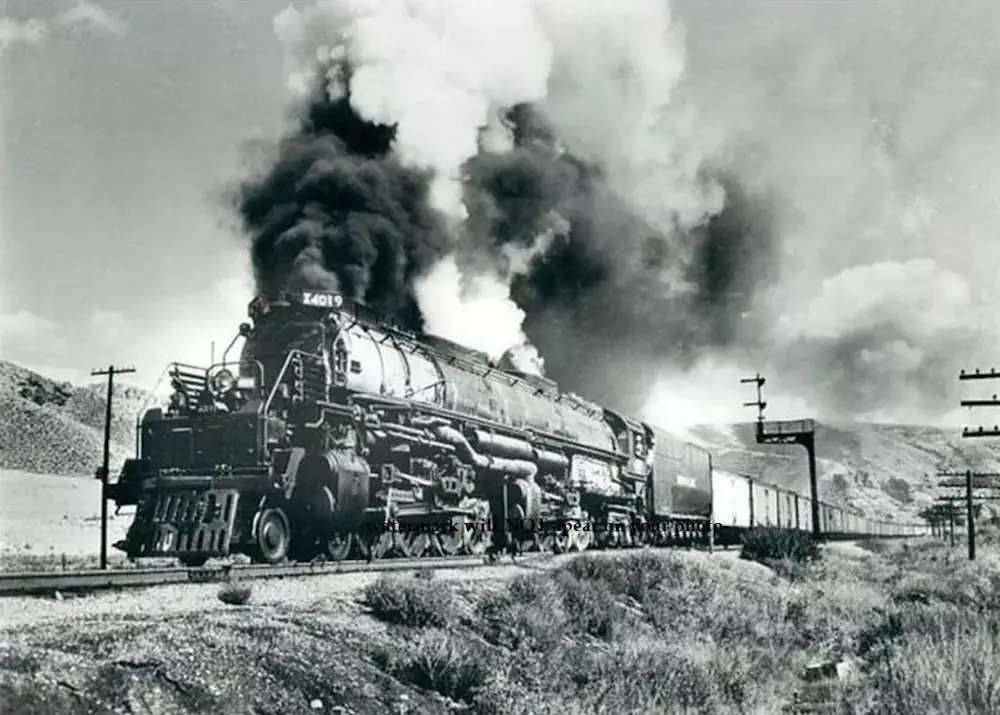
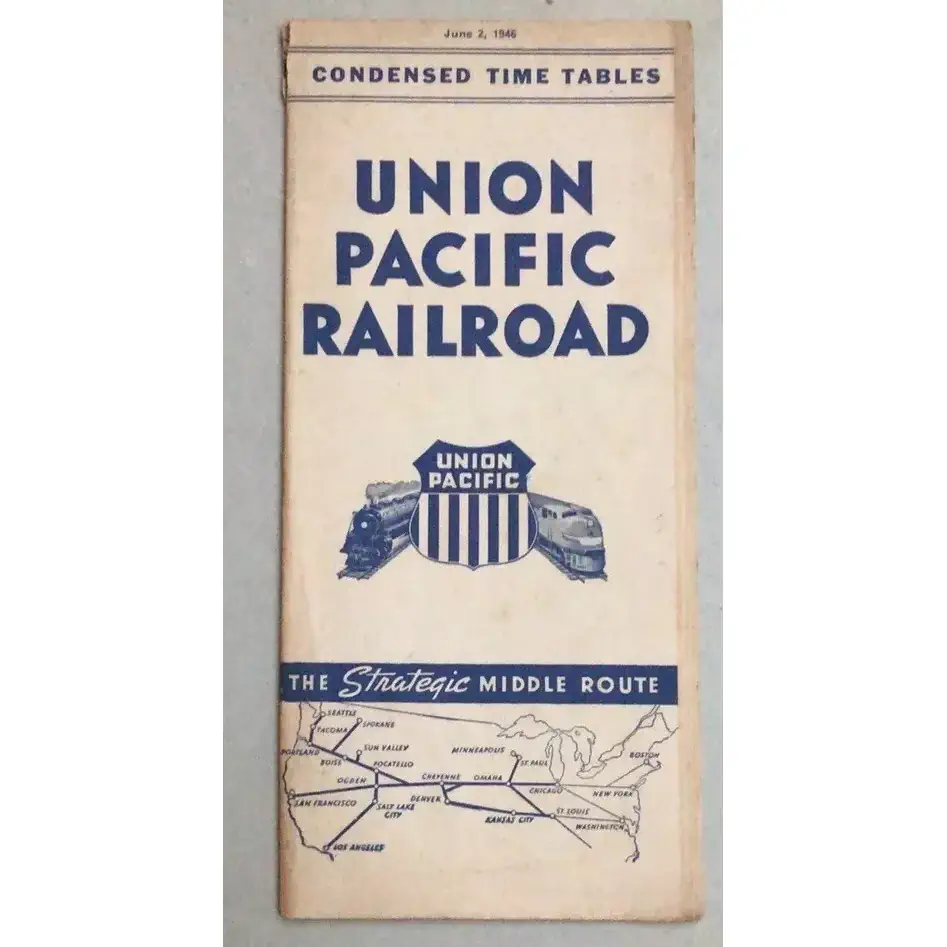
Throughout the 20th century, Union Pacific continued to adapt to changing times. The railroad adopted diesel locomotives in the 1940s, replacing its iconic steam engines, including the massive Big Boy locomotives used for hauling heavy freight across mountainous terrain. The transition to diesel reduced operational costs and improved efficiency, enabling Union Pacific to remain competitive in an industry increasingly threatened by automobiles and airlines.
Union Pacific also played a critical role during World War II, transporting troops, supplies, and materials essential to the war effort. Its vast network and efficient operations contributed significantly to the Allied victory, solidifying its reputation as one of America’s most reliable railroads.
However, the post-war years brought new challenges as the railroad industry struggled to compete with the growing popularity of trucks and air travel. Union Pacific responded by consolidating with other railroads, modernizing its infrastructure, and investing in new technologies. In the 1990s, Union Pacific merged with the Missouri Pacific and Southern Pacific railroads, creating one of the largest rail networks in the world. Today, Union Pacific operates over 32,000 miles of track, connecting 23 states and playing a crucial role in the nation’s freight transport.
Legacy and Impact
The Union Pacific Railroad’s legacy is woven into the fabric of American history. From its pioneering role in building the transcontinental railroad to its status as a modern freight giant, Union Pacific has left an indelible mark on the United States. Its journey reflects the challenges, opportunities, and transformations of the country itself, embodying the spirit of exploration, innovation, and resilience.
Union Pacific’s history is not without controversy, especially concerning the displacement of Native American communities and the environmental impacts of rail expansion. However, its contributions to American industry, culture, and connectivity are undeniable. As Williams observes in A Great and Shining Road, “Union Pacific helped bridge a continent, creating an artery of progress that propelled America into the modern age” (Williams, 1988).
References
- Ambrose, S. E. (2000). Nothing Like It in the World: The Men Who Built the Transcontinental Railroad 1863-1869. New York: Simon & Schuster.
- Klein, M. (2006). Union Pacific: The Reconfiguration. New York: Oxford University Press.
- Williams, J. H. (1988). A Great and Shining Road: The Epic Story of the Transcontinental Railroad. New York: Times Books.


